Ha Giangis a hidden gem for those seeking an unforgettable adventure along the less-traveled road. Nestled in the mountainous region of the far North, Ha Giang is home to towering limestone karsts, heart-racing mountain passes, and vibrant hill tribes. Raw, authentic, and awe-inspiring, Ha Giang wins every traveler's heart with jaw-dropping vistas and heartwarming cultural interactions.
Ha Giang at a glance
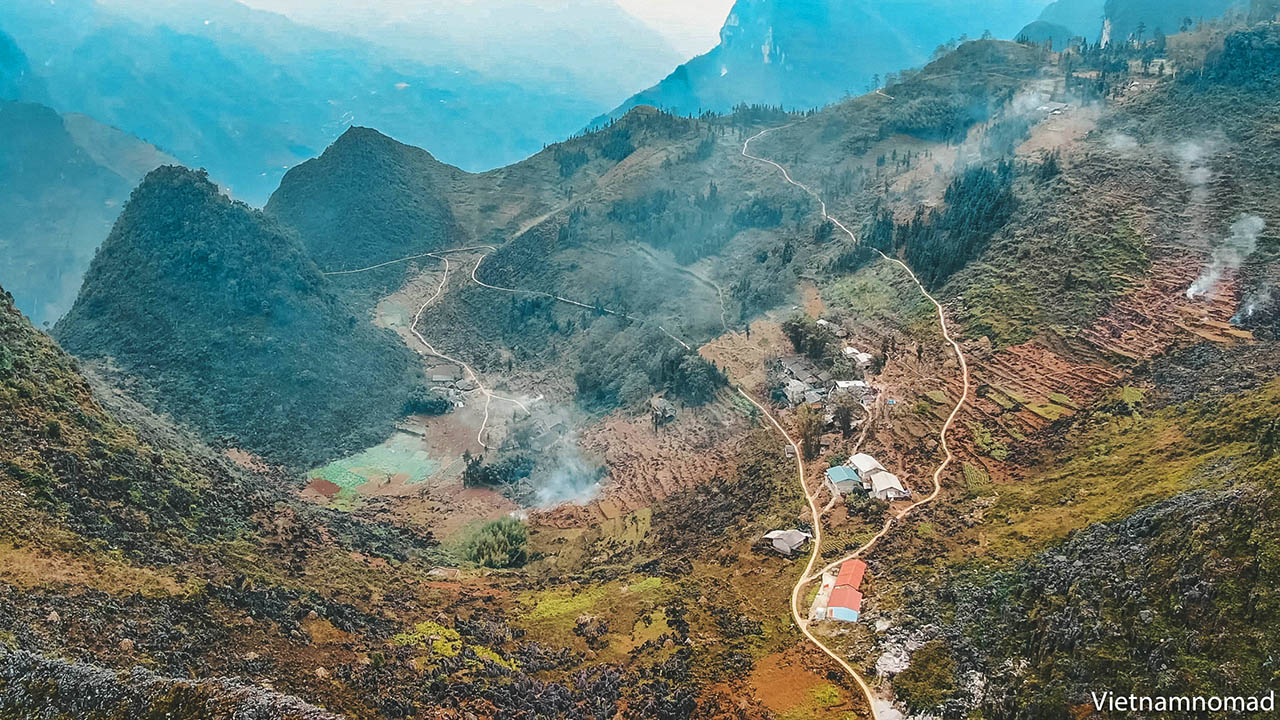
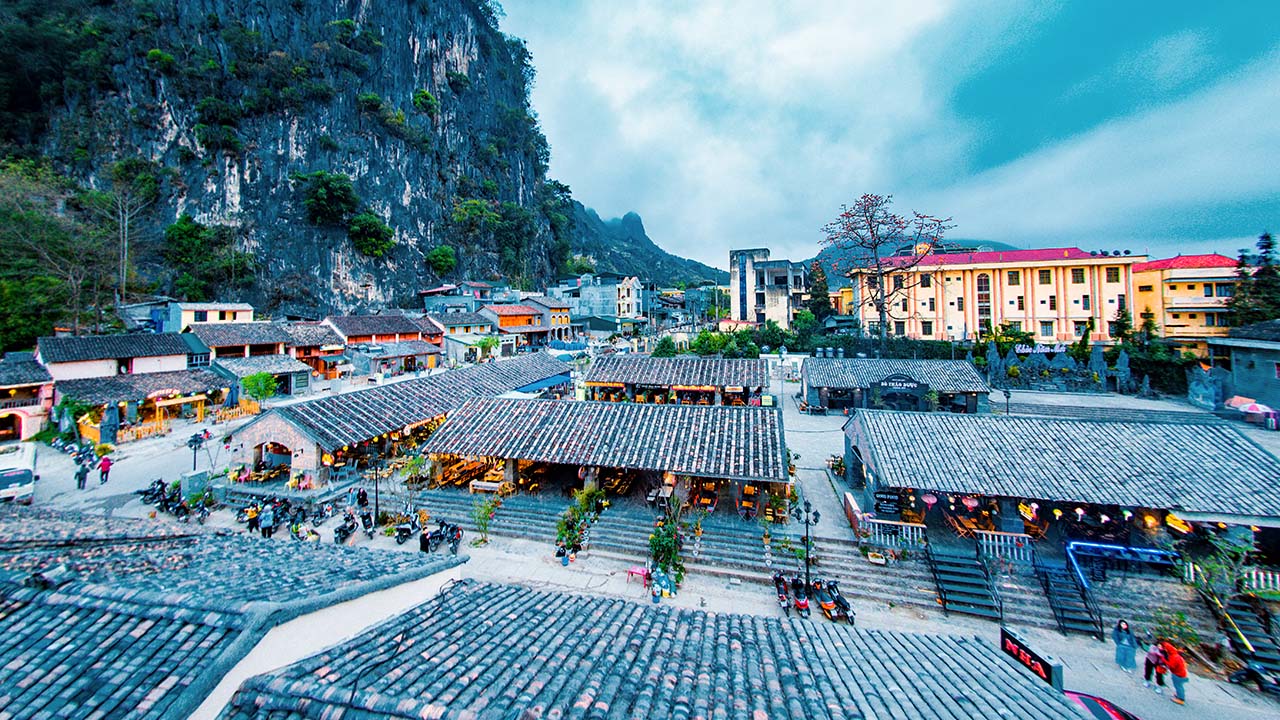
Majestic limestone landscape across the Ha Giang Plateau
Ha Giang is the northernmost province of Vietnam, sharing a 277-km border with China to the north. It borders Cao Bang in the east, Yen Bai and Lao Cai in the west, and Tuyen Quang in the south. The provincial center is Ha Giang City, situated approximately 300 km north of Hanoi via National Highway 2.
The terrain is dominated by rugged limestone mountains, dramatic canyons, and high plateaus. Ha Giang is home to over 22 distinct ethnic minority groups including the H'Mong, Tay, Dao, Giay, and Lo Lo, each preserving their centuries-old traditions, earthen architecture, and vibrant festive costumes.
Key Highlights: Dong Van Karst Plateau UNESCO Global Geopark, Ma Pi Leng Pass, Lung Cu National Flagpole, Tu San Canyon on Nho Que River, Vuong Palace, and Sung La Valley.
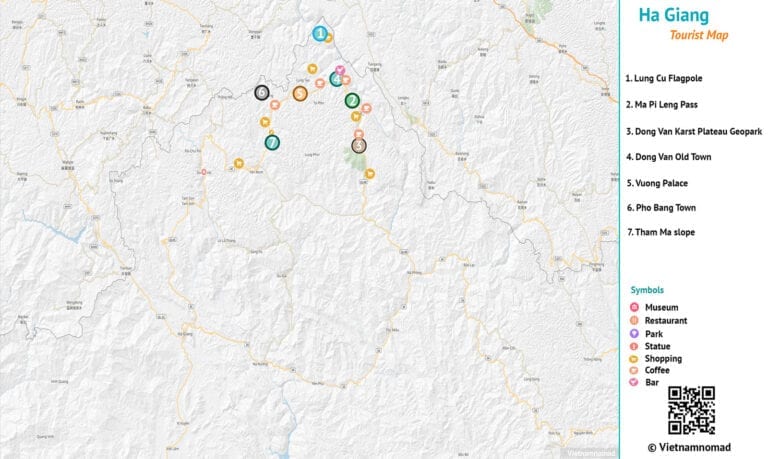
Ha Giang tourist map
To explore Ha Giang seamlessly, travelers typically follow the legendary 3-to-5-day “Ha Giang Loop” itinerary: beginning in Ha Giang City, traversing Quan Ba Heaven Gate and Fairy Hills, the pine forests of Yen Minh, Dong Van Old Quarter, Ma Pi Leng Pass to Meo Vac, and looping back through the pristine waterfalls of Du Gia.
Detailed tourist map showing key destinations on the Ha Giang Loop
Ha Giang weather
Ha Giang is stunning all year round, with each season offering distinct scenery and experiences. Depending on whether you wish to see blooming flowers, chase ethereal clouds, or admire golden terraced rice fields, here is what each season brings:
Spring (Jan - Mar)Flower Blossoms
Pink peach blossoms, white plum, and pear flowers carpet mountain slopes, creating a fairytale atmosphere around rustic earthen homes.
Summer (Apr - Jun)Watering Season
Water fills terraced fields in Hoang Su Phi like giant cascading mirrors. The legendary Khau Vai Love Market takes place on the 27th of the 3rd lunar month.
Autumn (Sep - Oct)Golden Harvest
Peak season to admire golden cascading rice terraces in Hoang Su Phi. Cool, pleasant autumn breezes and crystal clear skies make travel idyllic.
Winter (Oct - Dec)Buckwheat Flowers
Iconic buckwheat flowers blanket the valleys in pink and violet hues, followed by yellow mustard blooms and crisp mountain mists.
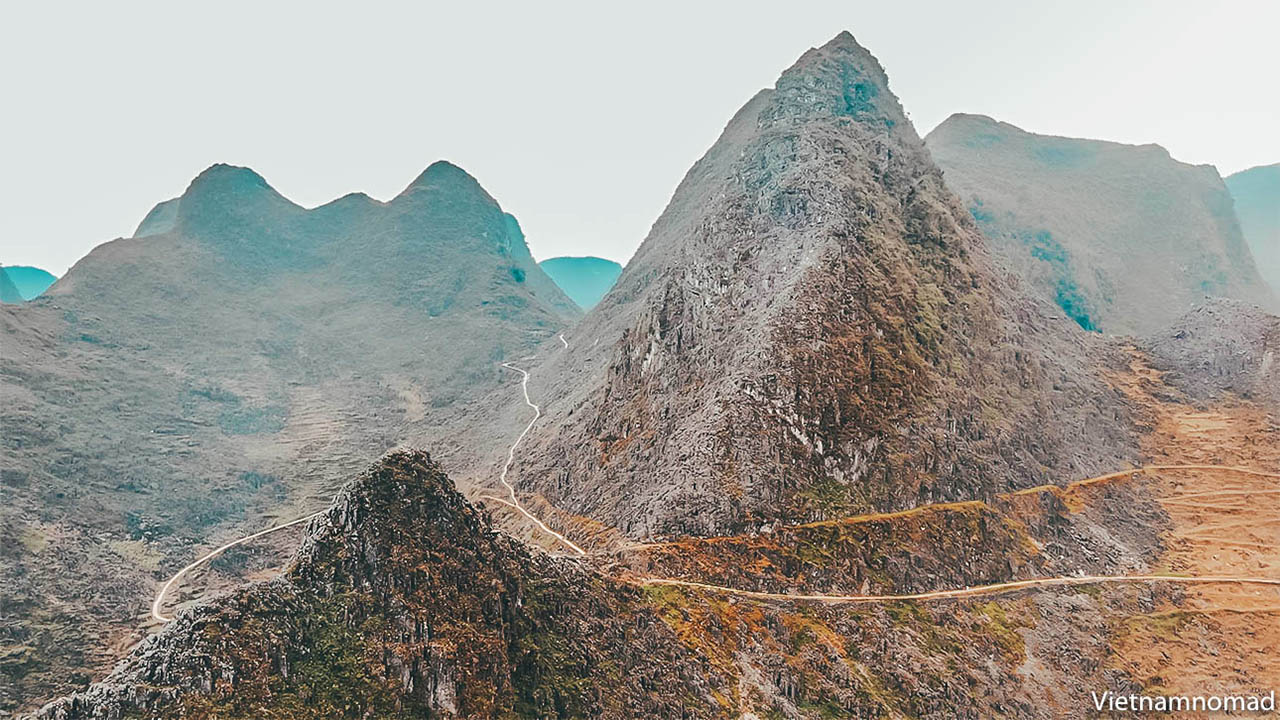
Winding highland road cutting through ethereal mountain clouds
How to go from Hanoi to Ha Giang?
Ha Giang is about 300 km from central Hanoi. The most modern and popular route follows the Hanoi - Lao Cai Highway (exiting at IC9 Phu Tho) or National Highway 2 via Tuyen Quang. Total travel time is approximately 6 to 7 hours.
Sleeper & VIP Limousine
Overnight cabin buses depart My Dinh / Gia Lam at 9-10 PM and arrive at dawn. Comfortable and affordable (250,000 - 350,000 VND / $11 - $15).
Motorbike Adventure
For seasoned riders. Alternatively, take a bus to Ha Giang City and rent a semi-automatic or manual motorbike (150,000 - 200,000 VND/day) for the Loop.
Easy Rider / Private Tour
The most popular choice for travelers: sit behind an experienced local 'Easy Rider' guide or hire a private vehicle to enjoy the views safely.
Where to stay in Ha Giang?
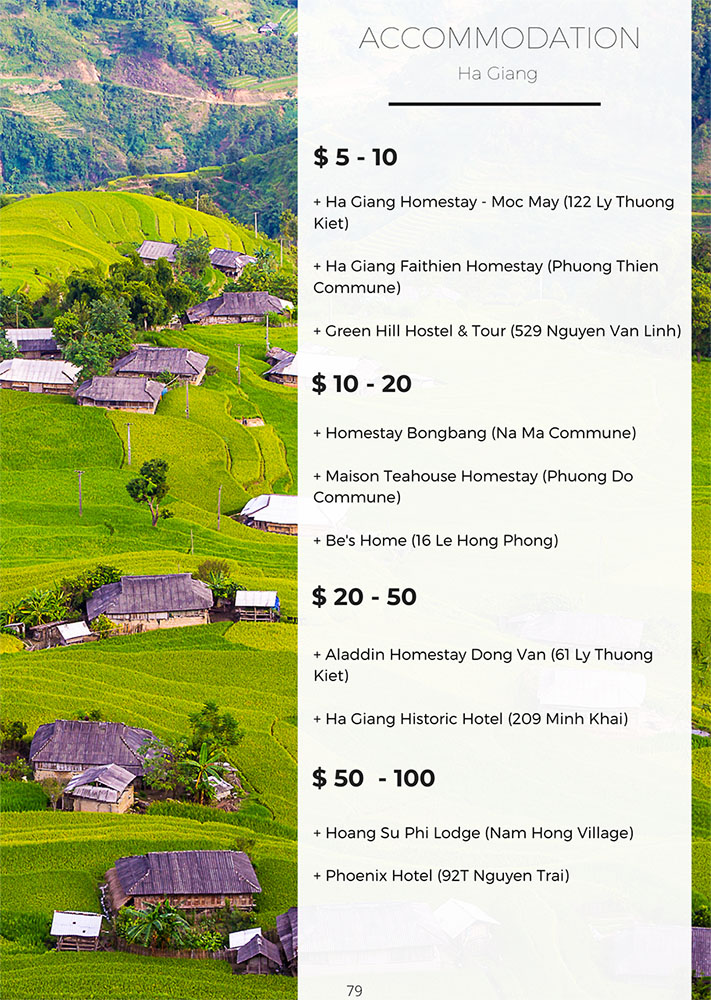
Along the Ha Giang Loop, accommodation options range from comfortable modern hotels in major towns to authentic ethnic cultural homestays nestled among the mountains:
Ha Giang City: Phoenix Hotel (4-star), Ha Giang Historic House, Jasmine Hostel.
Dong Van Town: Hoa Cuong Hotel, Dong Van B&B, H'Mong Homestay, Nha Co Homestay.
Meo Vac: Pa Vi H'Mong Community Cultural Tourism Village (featuring dozens of scenic lodges like Auberge de Meo Vac, Meo Vac Clay House, Pa Vi Homestay).
Du Gia & Yen Minh: Du Gia Homestay, Du Gia Panorama, Tom's Du Gia Homestay beside refreshing waterfalls and rivers.
Traditional eco-lodge architecture at Pa Vi Cultural Village, Meo Vac
Lưu Trú & Hành Trình Khám Phá
Đối tác chính thức: Traveloka
Tuyển Tập Khách Sạn 5 Sao, Boutique Resort Ven Sông Hương Huế & Homestay Bản Địa
Vị trí trung tâm bên bờ Sông Hương & Cầu Trường Tiền hoặc giữa cao nguyên hùng vĩ • Ưu đãi đặt sớm tốt nhất
You may have seen countless photographs of Ha Giang, but words fail to capture its true majesty until you witness it with your own eyes. Here are the top 9 iconic attractions you cannot miss:
1. Lung Cu Flagpole
1. Lung Cu Flagpole - Ha Giang
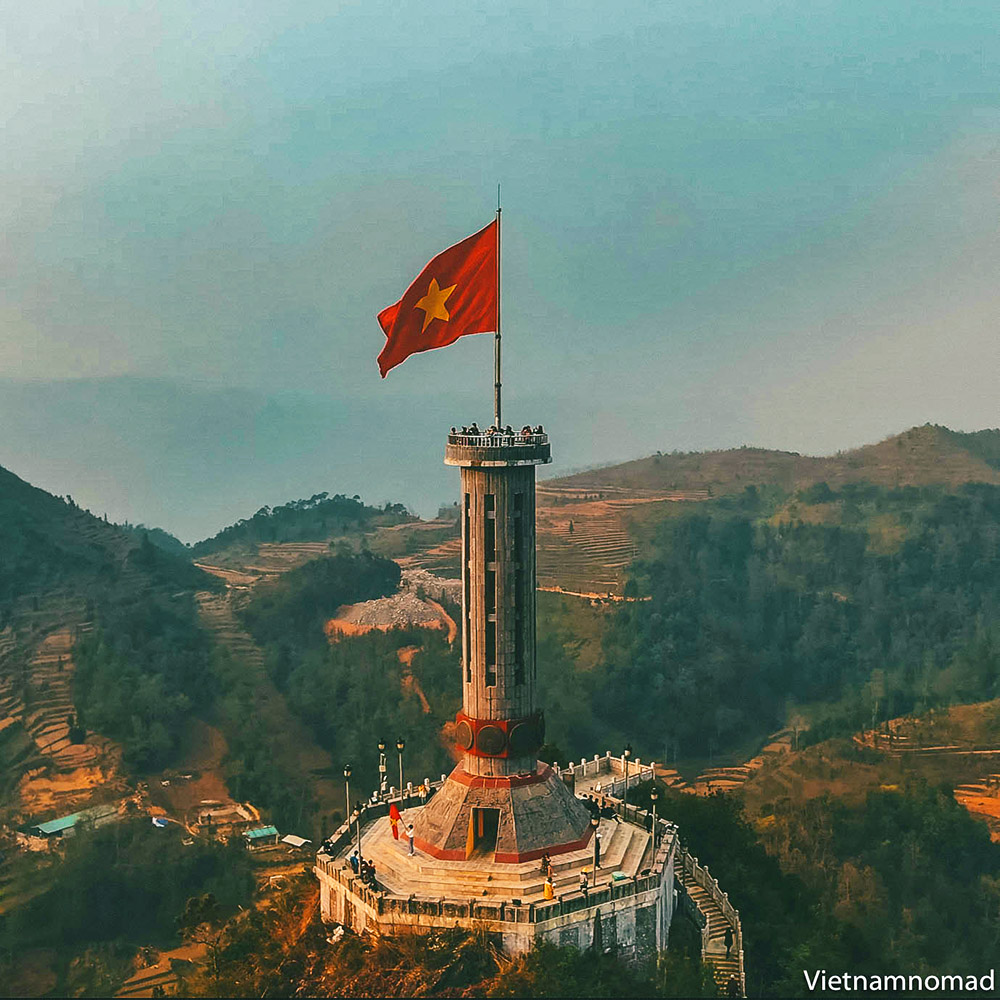
Perhaps no tourist visits Ha Giang without standing at the top of the Lung Cu Flagpole. Rising proudly atop Dragon Mountain (Nui Rong) at an altitude of approximately 1,470 meters above sea level, this sacred monument marks the northernmost sovereign territory of Vietnam. The giant national flag spans exactly 54 square meters, representing the unity and solidarity of the 54 ethnic groups living across Vietnam.
To reach the top of the flagpole tower, visitors climb 839 stone steps divided into three tiers. From the observatory terrace, you are rewarded with awe-inspiring panoramic vistas of the surrounding villages, peaceful Lo Lo Chai ethnic settlement below, and two pristine freshwater lakes known as the “Dragon Eyes” (Mat Rong) that never run dry.
Traveler Tip: Visit around late afternoon for spectacular golden hour light over the Lo Lo Chai valley.
Lung Cu Commune, Dong Van District
2. Ma Pi Leng Pass
2. Ma Pi Leng Pass - Ha Giang
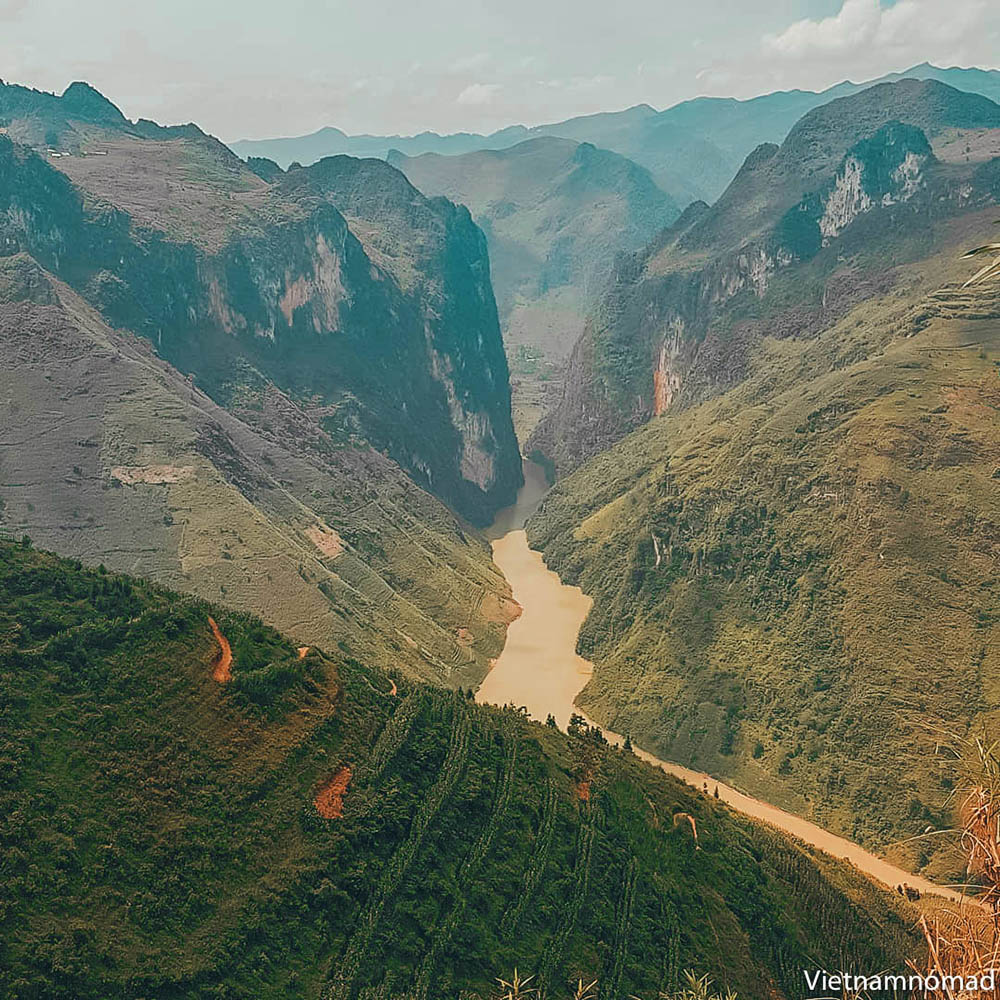
Revered as the “King of Vietnam's Great Mountain Passes”, Ma Pi Leng stretches approximately 20 kilometers along the iconic Happiness Road (Con duong Hanh Phuc). Carved directly into sheer limestone cliffs by thousands of young volunteer workers and local ethnic minorities between 1959 and 1965, this breathtaking engineering marvel winds through dramatic chasms and towering rock faces.
Stopping at the Ma Pi Leng viewpoint, travelers gaze thousands of meters down into the emerald-green ribbon of the Nho Que River snaking through the deepest karst canyon in Southeast Asia. The raw grandeur of jagged limestone peaks piercing through ethereal mountain mist makes this an unforgettable highlight of the Ha Giang Loop.
Traveler Tip: Ride carefully, maintain low gear on steep descents, and stop at the designated glass-bottom skywalk or cafe rest stops for photos.
Happiness Road (QL4C), Dong Van - Meo Vac
3. Dong Van Karst Plateau Geopark
3. Dong Van Karst Plateau Geopark - Ha Giang
Recognized by UNESCO in 2010 as Vietnam's first Global Geopark, Dong Van Karst Plateau spans over 2,350 square kilometers across four northern mountainous districts. Situated at an average altitude of 1,000 to 1,600 meters, about 80% of the surface consists of stark limestone formations sculpted over 400 to 600 million years of geological evolution.
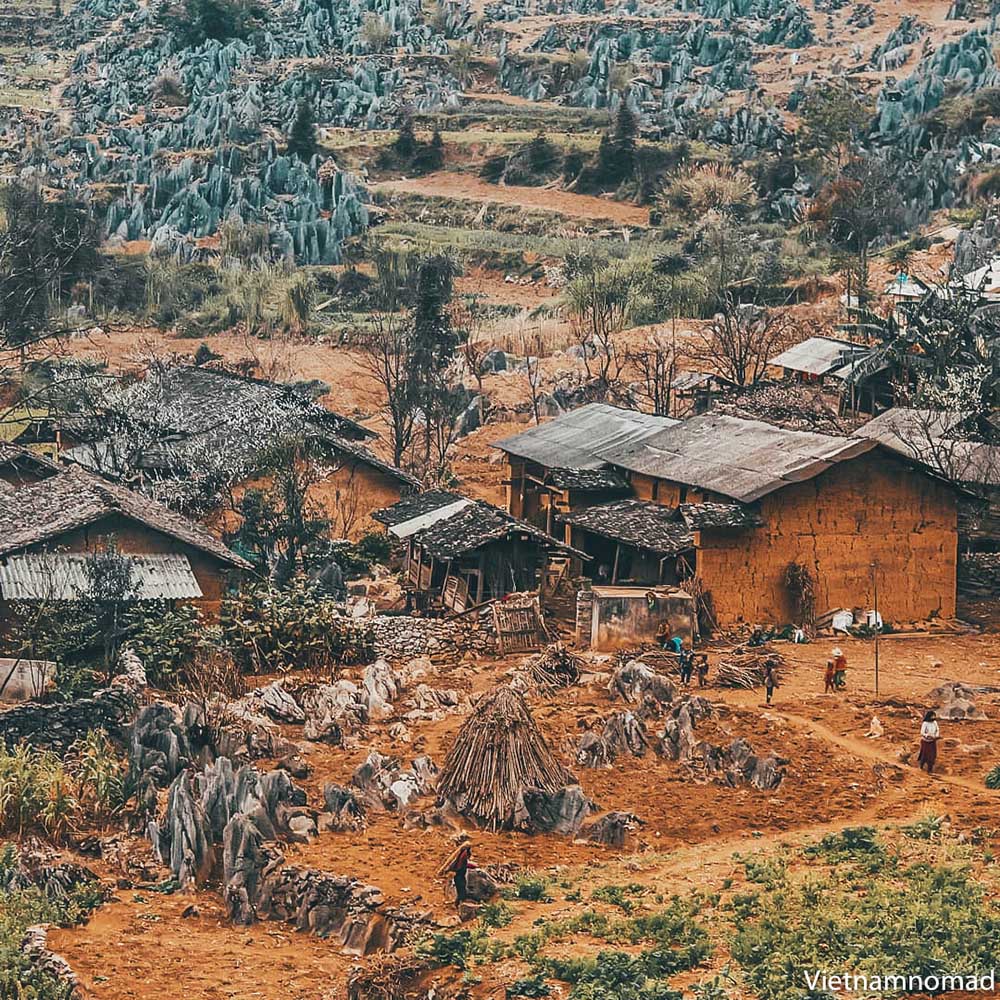
Beyond its astonishing geological marvels, Dong Van is a living museum of cultural heritage, home to 17 ethnic groups such as the H'Mong, Dao, Tay, and Giay. Here, stone permeates every facet of life: from dry-stone terrace walls and ancient earthen houses with yin-yang roofs to vibrant traditional textile markets.
Traveler Tip: Bring a warm fleece or windbreaker even in summertime, as plateau nights can get chilly.
Quan Ba, Yen Minh, Dong Van, Meo Vac Districts
4. Tham Ma Slope
4. Tham Ma Slope - Ha Giang
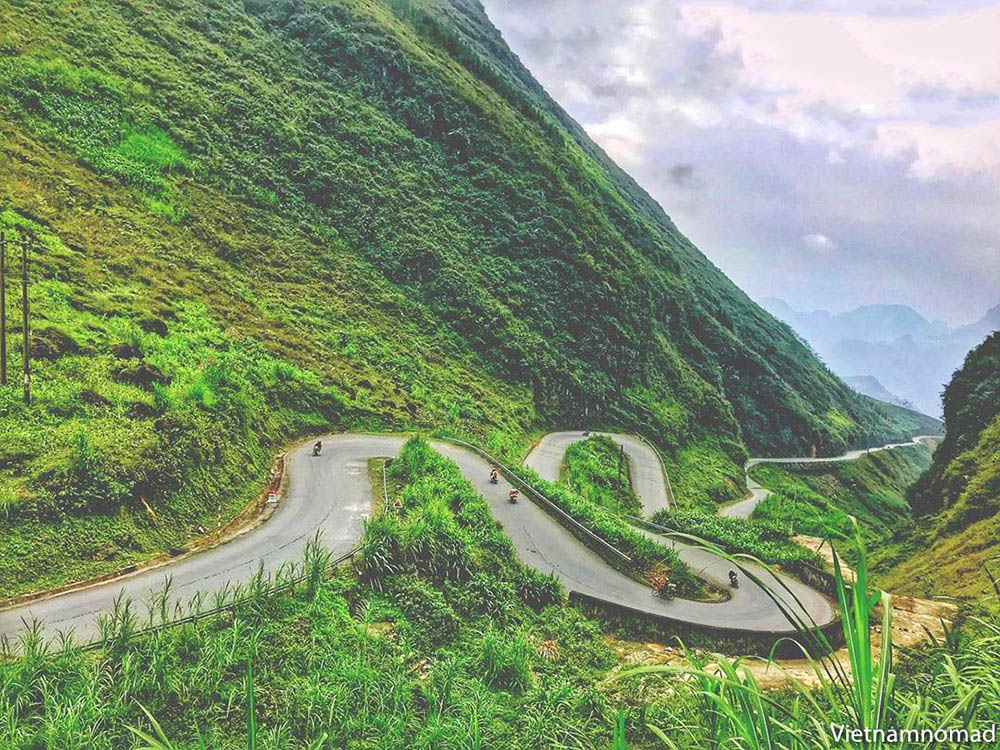
Tham Ma Slope is a famous serpentine mountain pass on Highway 4C connecting Yen Minh district with Dong Van. Featuring 9 intense S-shaped hairpin bends nestled between towering cliffs, the slope derives its historical name from the ancient practice of testing horses (“Tham Ma”). Pack horses carrying heavy goods were driven up the steep ascent; those that reached the crest healthy and strong were kept, while weak horses were retired.
Today, Tham Ma Slope is a favorite photo destination for road-trippers and motorbikers. From the observation pavilion at the top, you can marvel at the winding asphalt curves snaking gracefully down into the lush green valley below, often greeted by ethnic children carrying vibrant wicker baskets of wildflowers.
Traveler Tip: Stop at the top parking area for the best wide-angle photography perspective of all 9 bends.
QL4C between Yen Minh and Pho Bang
5. Dong Van Old Quarter
5. Dong Van Old Quarter - Ha Giang
Tucked inside a tranquil mountain valley encircled by sheer limestone karsts, Dong Van Old Quarter was established in the early 20th century. Originally inhabited by several Tay and H'Mong families, it later saw Chinese and French settlers shaping its distinctive architecture. The historic quarter comprises about 40 two-story houses constructed with thick compacted-earth walls (nha trinh tuong), dark wooden pillars, and traditional double yin-yang terracotta roof tiles.
On weekends, the old quarter comes alive with lantern-lit evening markets, ethnic music performances, and mouth-watering street food stalls serving Thang Den, roasted chestnuts, and buckwheat cakes. The old French central market building now houses charming vintage coffee shops where you can sip rich Vietnamese drip coffee while soaking in the nostalgic atmosphere.
Traveler Tip: Try the Cafe Pho Co situated in a 100-year-old courtyard house for a cozy coffee break.
Dong Van Town, Dong Van District
6. Vuong Palace (H'Mong King's Palace)
6. Vuong Palace (H'Mong King's Palace) - Ha Giang
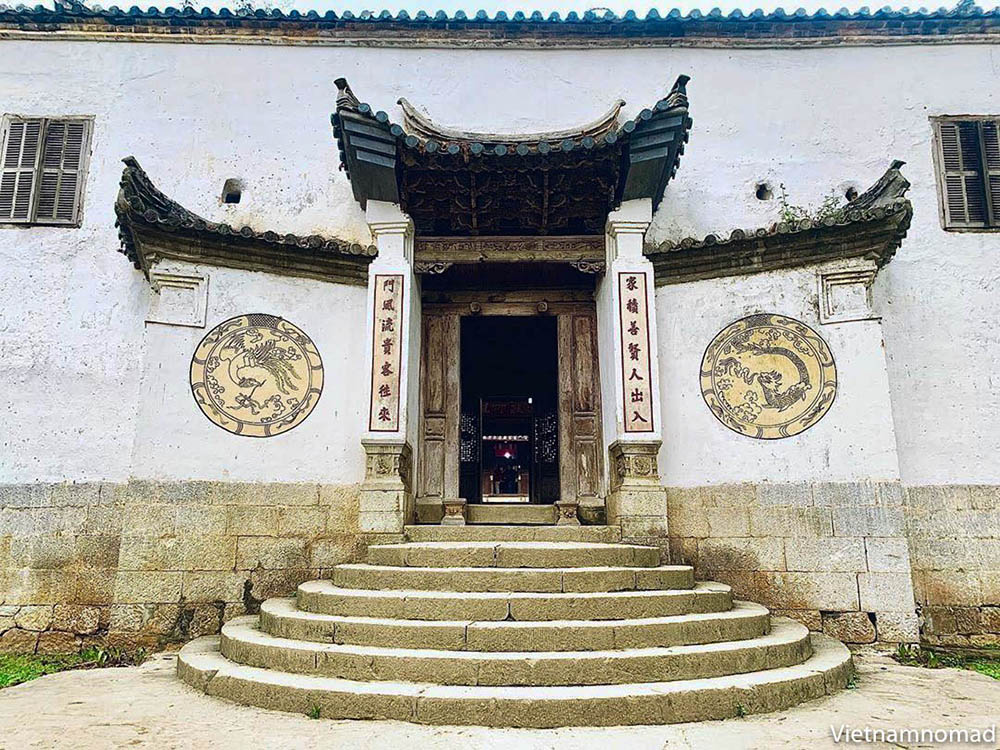
Situated in Sa Phin valley surrounded by protective pine trees, Vuong Palace was the fortified residence of Vuong Chinh Duc, the influential ruler recognized as the “King of the H'Mong” (Vua Meo) who governed the autonomous borderland during the late 19th and early 20th centuries. Built over 8 years from 1898 to 1907 at a massive cost of 150,000 silver Indochina piastres, the estate incorporates sophisticated Chinese Qing Dynasty aesthetics, French colonial stone fortification, and indigenous H'Mong woodwork.
The complex features 64 rooms across two levels, stone bulletproof watchtowers, massive wooden poppy-pod decorative pillars, and thick defensive perimeter walls. Touring the palace provides fascinating insights into the geopolitical history, opium trade, and highland royalty of northern Vietnam.
Traveler Tip: Entrance ticket is approximately 25,000 VND ($1.05). Local guides in traditional attire are available at the entrance.
Sa Phin Valley, Dong Van District
7. Sung La Valley (Pao's House)
7. Sung La Valley (Pao's House) - Ha Giang
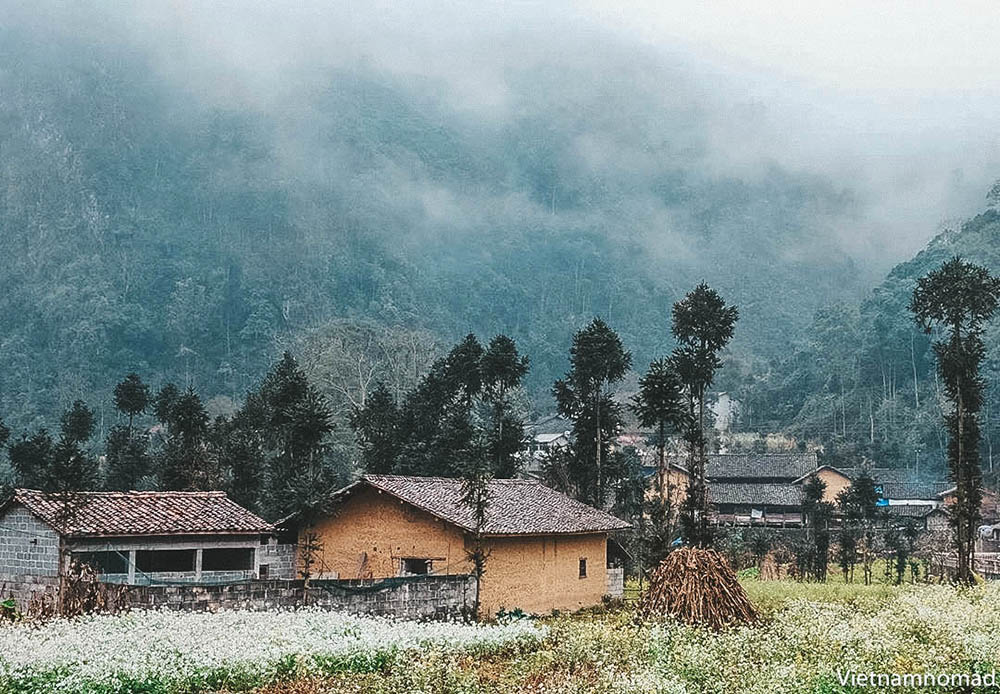
Often hailed by travelers as “The place where rocks blossom” (Noi da no hoa), Sung La Valley lies peacefully beneath Highway 4C. Blessed with fertile soil, the valley bursts into breathtaking kaleidoscopic colors throughout the year: white plum flowers in spring, purple-pink buckwheat petals in autumn, and bright yellow mustard blossoms in winter.
At the heart of Sung La in Lung Cam village stands “Pao's House” (Nha cua Pao), an iconic traditional H'Mong earthen courtyard homestead that served as the primary filming location for the acclaimed Vietnamese movie “The Story of Pao”. Entering through the weathered wooden gate beneath blooming plum trees feels like stepping into a romantic bygone era.
Traveler Tip: A small entrance fee of 10,000 VND applies to visit Pao's House. Please ask respectfully before photographing local residents.
Sung La Commune, Dong Van District
8. Tu San Canyon & Nho Que River Boat Cruise
8. Tu San Canyon & Nho Que River Boat Cruise - Ha Giang
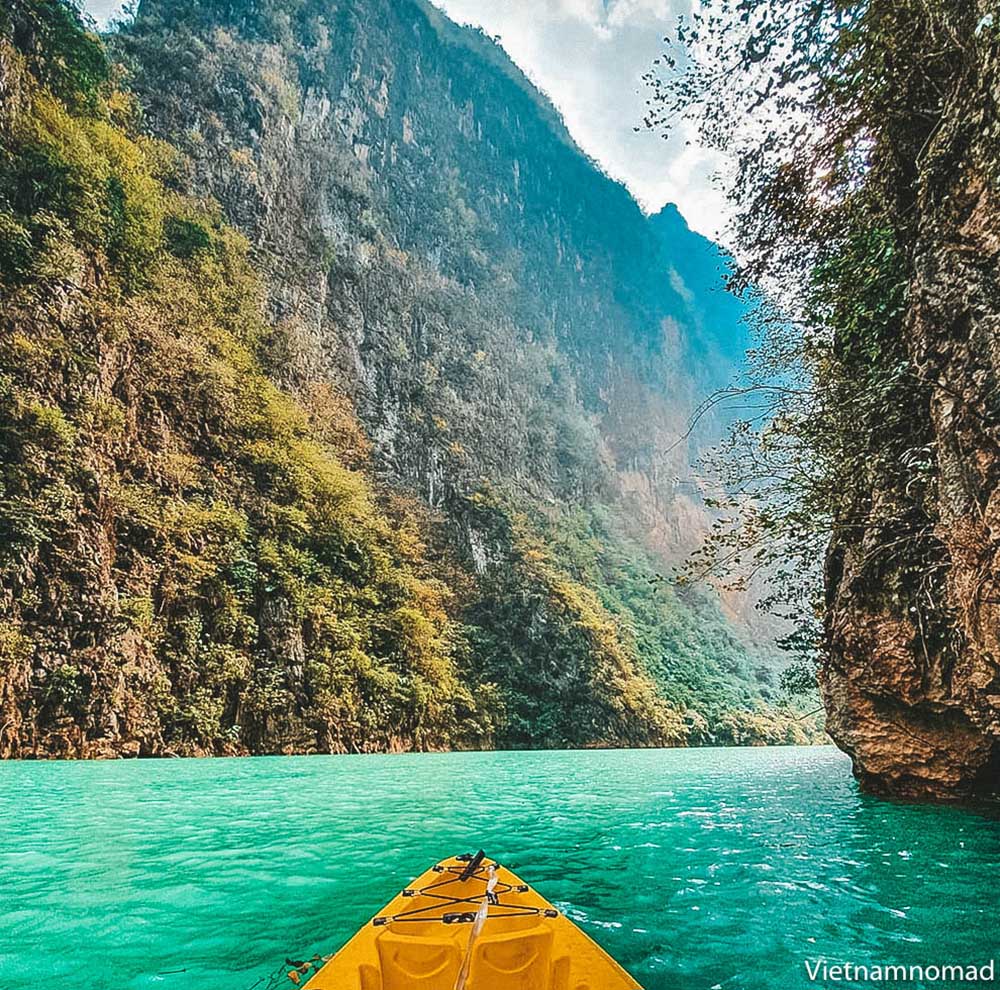
With vertical cliff walls towering 700 to 800 meters into the sky, a canyon length of 1.7 kilometers, and a depth reaching nearly 1,000 meters, Tu San Canyon is celebrated as the deepest and most majestic geological canyon in Southeast Asia. Nestled directly beneath the formidable curves of Ma Pi Leng Pass, the chasm is mirrored in the emerald green waters of the Nho Que River.
Taking an eco-boat or kayak cruise along the river through Tu San Canyon is an absolute highlight of any journey to Ha Giang. Looking straight upward from water level between the sheer colossal limestone monoliths provides an overwhelming sense of nature's timeless power and serenity.
Traveler Tip: Boat tour tickets cost around 100,000 - 120,000 VND ($4.2 - $5) per passenger. Motorbike taxis (xe om) can ferry you down the steep access road to the boat wharf for about 100,000 VND round trip.
Foot of Ma Pi Leng, Meo Vac District
9. Pho Bang Town (The Forgotten Town)
9. Pho Bang Town (The Forgotten Town) - Ha Giang
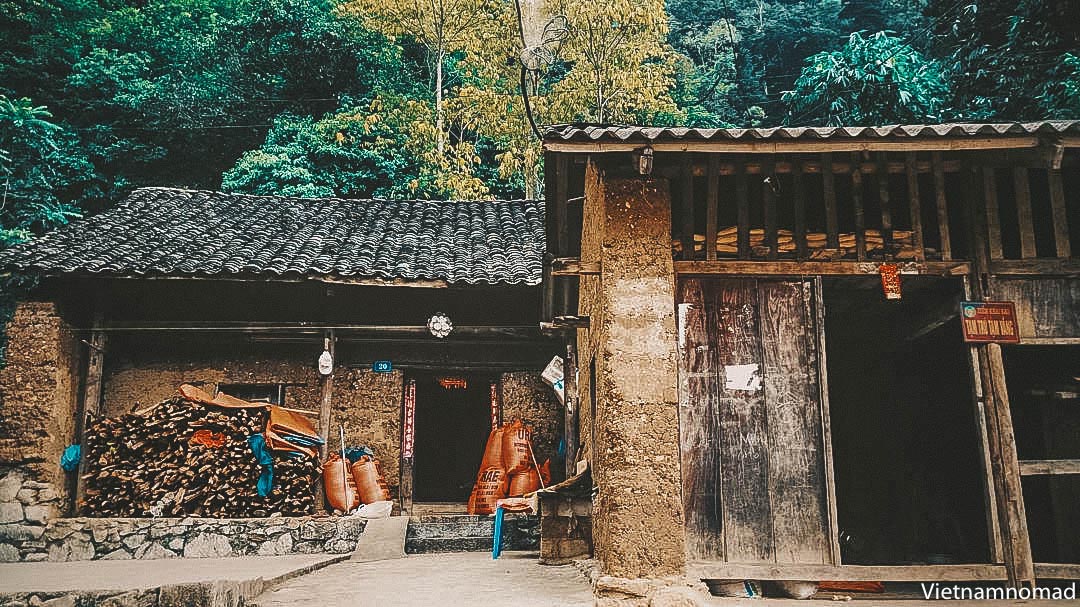
Hidden away from the main tourist highway behind massive karst crags, Pho Bang is affectionately known as Ha Giang's “forgotten town”. Once the bustling administrative center of Dong Van district before the seat moved, Pho Bang now rests in idyllic tranquility, preserving timeless earthen mud-brick homes with mossy tiled roofs, wooden window shutters, and vibrant red paper couplets.
A stroll through Pho Bang feels like stepping back centuries into an ancient border settlement. Rose gardens bloom vibrantly against the weathered adobe walls, and village elders chat leisurely on wooden doorsteps, creating an atmosphere of sublime peace rarely found elsewhere.
Traveler Tip: Visit on the weekly rotating market day (Cho Lui Pho Bang) every 6 days for a truly authentic local encounter.
Dong Van District, near China Border
Lưu Trú & Hành Trình Khám Phá
Đối tác chính thức: Traveloka
Tuyển Tập Khách Sạn 5 Sao, Boutique Resort Ven Sông Hương Huế & Homestay Bản Địa
Vị trí trung tâm bên bờ Sông Hương & Cầu Trường Tiền hoặc giữa cao nguyên hùng vĩ • Ưu đãi đặt sớm tốt nhất
Traveling to Ha Giang is not only about taking in the natural wonders of the rocky plateau, but also about discovering a rich, rustic cuisine shaped by the indigenous mountain culture:
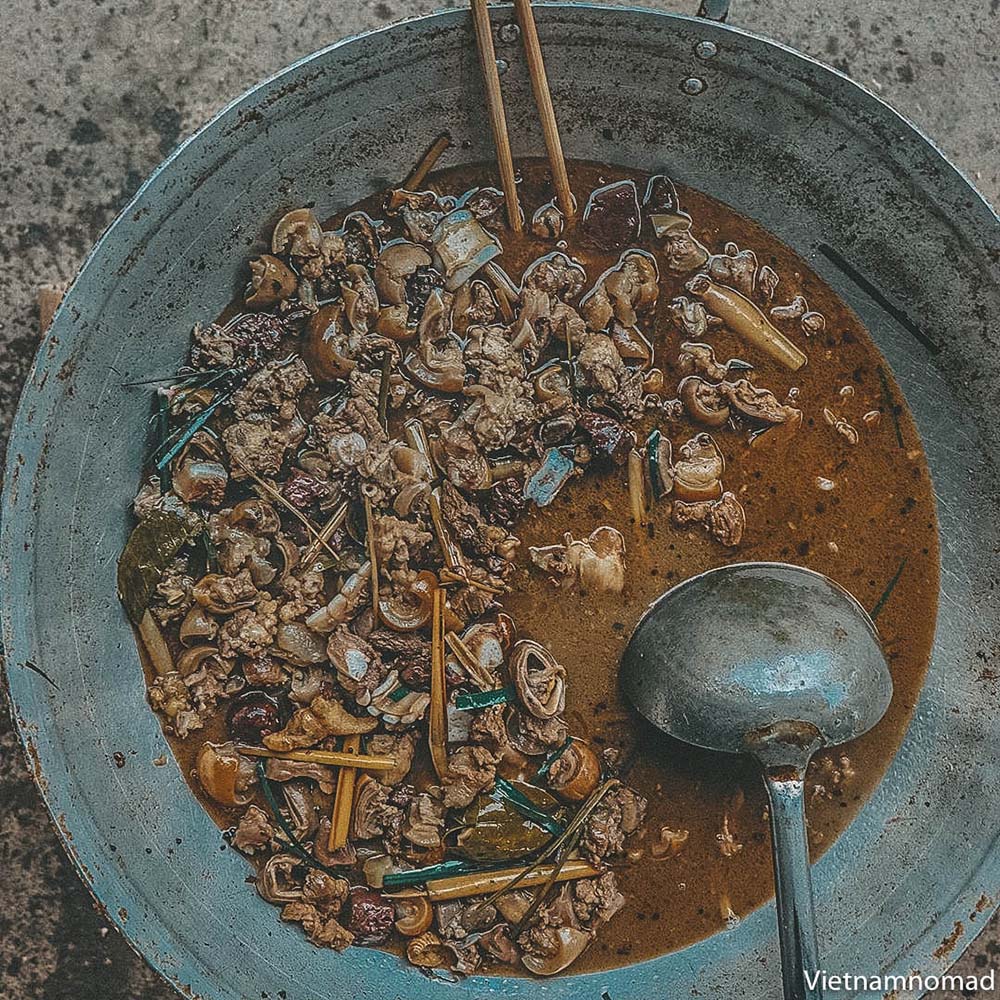
1. Thang Co (Traditional Horse Meat Stew)
1. Thang Co (Traditional Horse Meat Stew) - Ha Giang Specialty
Thang Co is the quintessential traditional specialty of the H'Mong people that has become famous across the Northwest highlands. Simmered in massive cast-iron cauldrons over wood fires at highland markets, the dish combines horse meat, bones, and organs slow-cooked with 12 aromatic mountain spices including cardamom, star anise, lemongrass, grilled ginger, and wild cinnamon bark.
Best enjoyed steaming hot on chilly plateau mornings, diners dip spoonfuls into roasted chili salt, paired with a piping hot glass of spicy corn wine (ruou ngo Men La). It offers a rich, deep, and authentically rugged taste of highland hospitality.
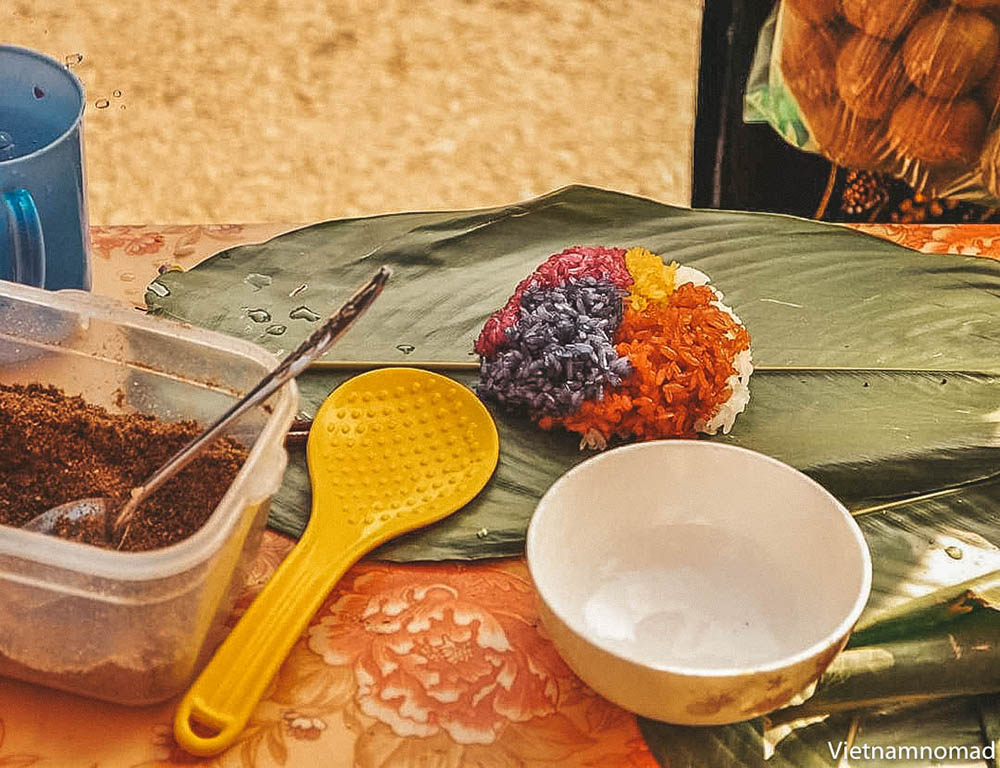
Xoi Ngu Sac is a culinary masterpiece of the Tay and Dao ethnic groups, showcasing fragrant glutinous mountain rice dyed naturally into five vibrant hues: red, yellow, green, purple, and white. Each color is extracted purely from forest plants: red and purple from magenta leaves (la cam), yellow from turmeric or ginger bark, and green from ginger leaves or pandan.
The five colors symbolize the Five Elements of the cosmos (Metal, Wood, Water, Fire, Earth) as well as wishes for prosperity, fertility, and family harmony. The rice is delightfully chewy, fragrant, and often sprinkled with roasted sesame salt.
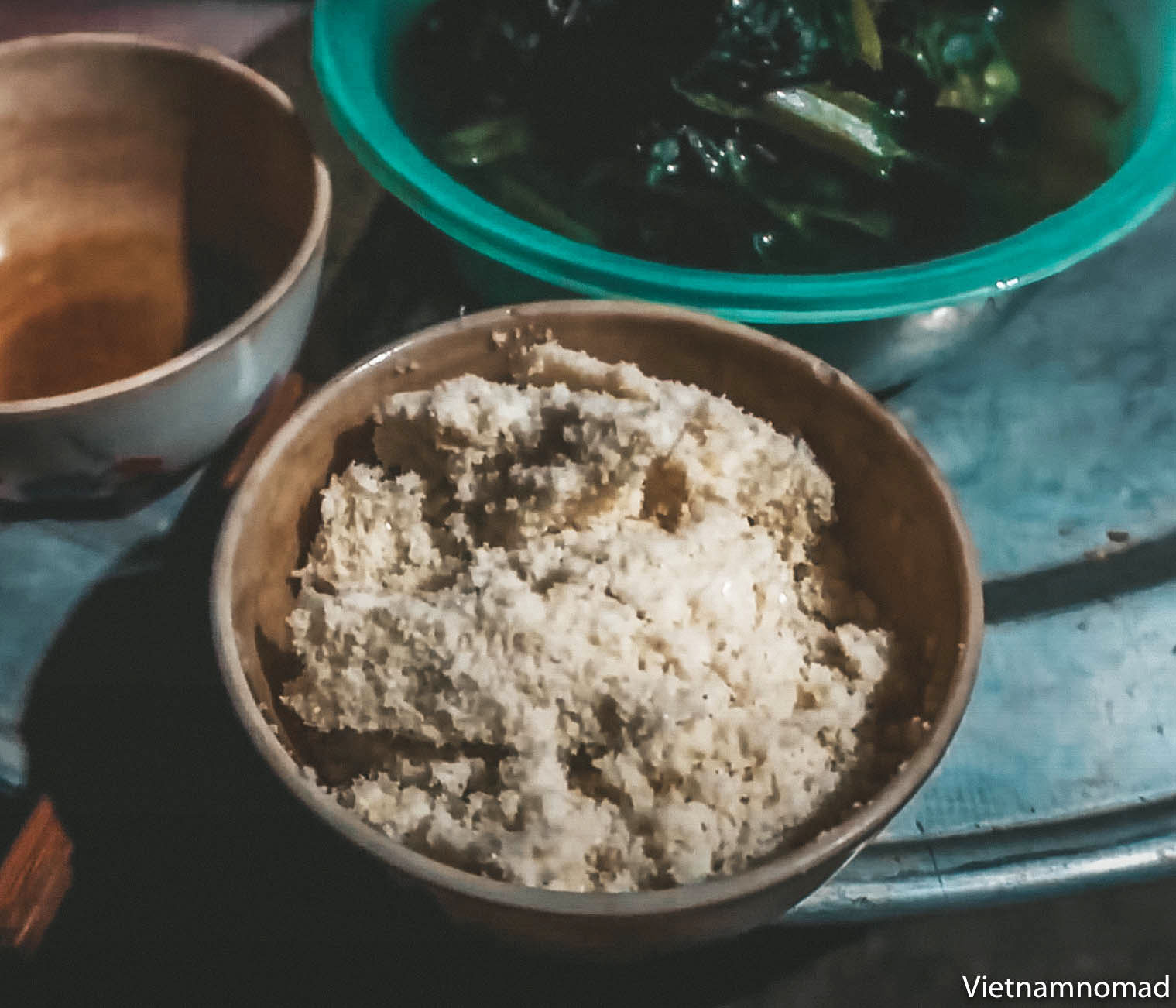
3. Men Men (Steamed Cornmeal)
3. Men Men (Steamed Cornmeal) - Ha Giang Specialty
Because fertile rice paddies are scarce among the rocky limestone peaks, the H'Mong cultivate hardy maize on cliffside crevices. Men Men is their cherished daily staple, prepared through an intricate process: local yellow corn kernels are stripped, stone-ground by hand into fine meal, moistened with water, and steamed twice in a traditional wooden steamer.
The resulting steamed cornmeal is fluffy, nutty, and subtly sweet. It is customarily served with a comforting bowl of mustard green soup (canh cai meo) or added directly to bowls of hot pho and broth.
4. Buckwheat Cake (Banh Tam Giac Mach)
4. Buckwheat Cake (Banh Tam Giac Mach) - Ha Giang Specialty
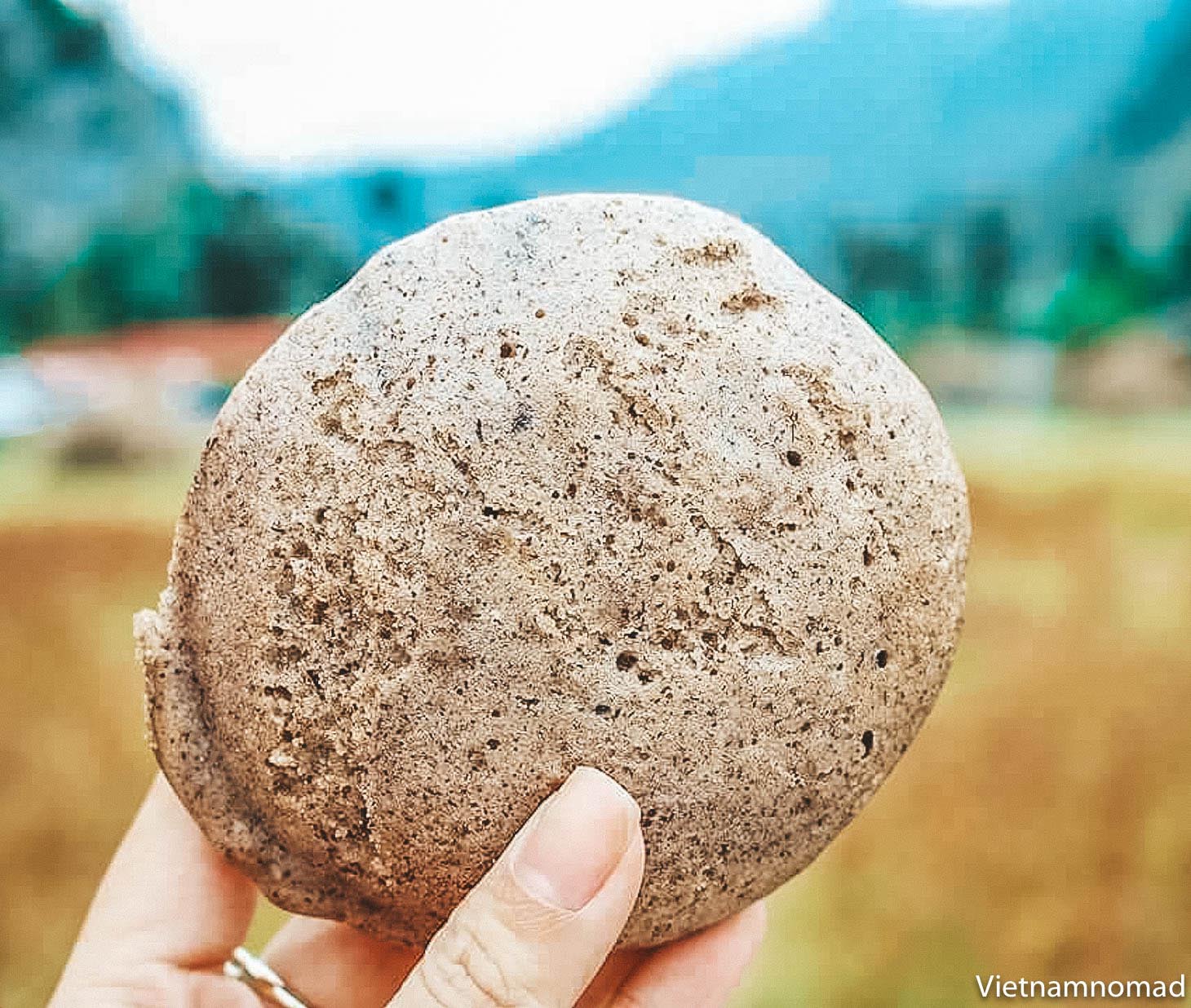
Buckwheat (Tam Giac Mach) is celebrated not only for painting the plateau in fairytale purple and pink blossoms each autumn, but also for its nutritious seeds. After harvesting, the triangular seeds are dried, ground into soft flour, kneaded with water, molded into palm-sized circular flatbreads, steamed, and then grilled over hot charcoal braziers.
Fresh off the grill, the cakes feature a golden-brown crispy crust with a soft, warm, and subtly sweet, nutty interior with a hint of wild mountain herbs. They make the perfect snack while strolling through Dong Van and Meo Vac weekend markets.
5. Aconite Root Congee (Chao Au Tau)
5. Aconite Root Congee (Chao Au Tau) - Ha Giang Specialty
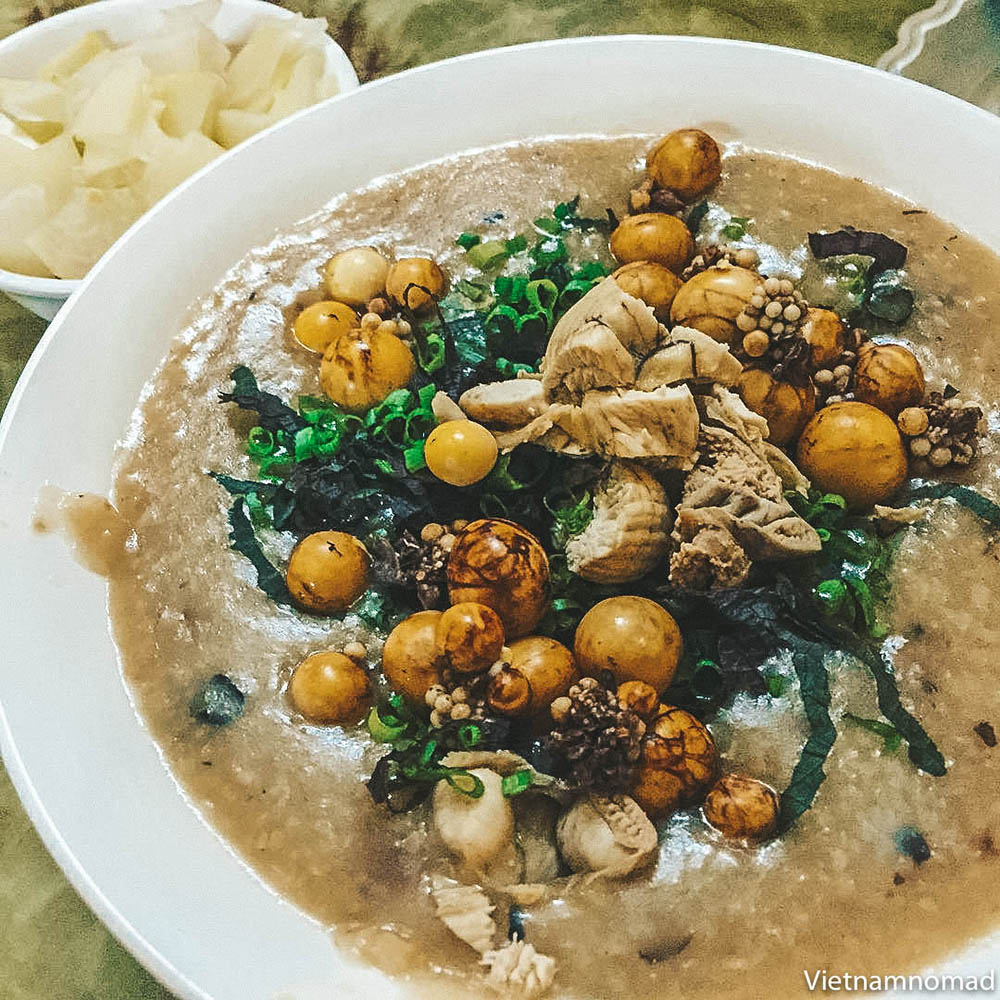
Chao Au Tau is a famous highland congee made from the tuberous roots of the aconite plant (au tau), which grows on high rocky summits. Although raw aconite is naturally toxic, highland chefs possess ancestral knowledge to detoxify it through soaking in rice water and simmering continuously for 12 to 14 hours until it turns into a soft, safe, and creamy paste.
The congee is cooked with upland sticky rice, pork trotter broth, minced pork, and topped with scallions, perilla leaves, and a raw egg yolk. First-time tasters notice a gentle bitter note followed by a sweet, rich aftertaste. In traditional medicine, it is renowned for curing colds, soothing joints, and promoting deep sleep.
6. Bac Me Bamboo Tube Rice (Com Lam Bac Me)
6. Bac Me Bamboo Tube Rice (Com Lam Bac Me) - Ha Giang Specialty
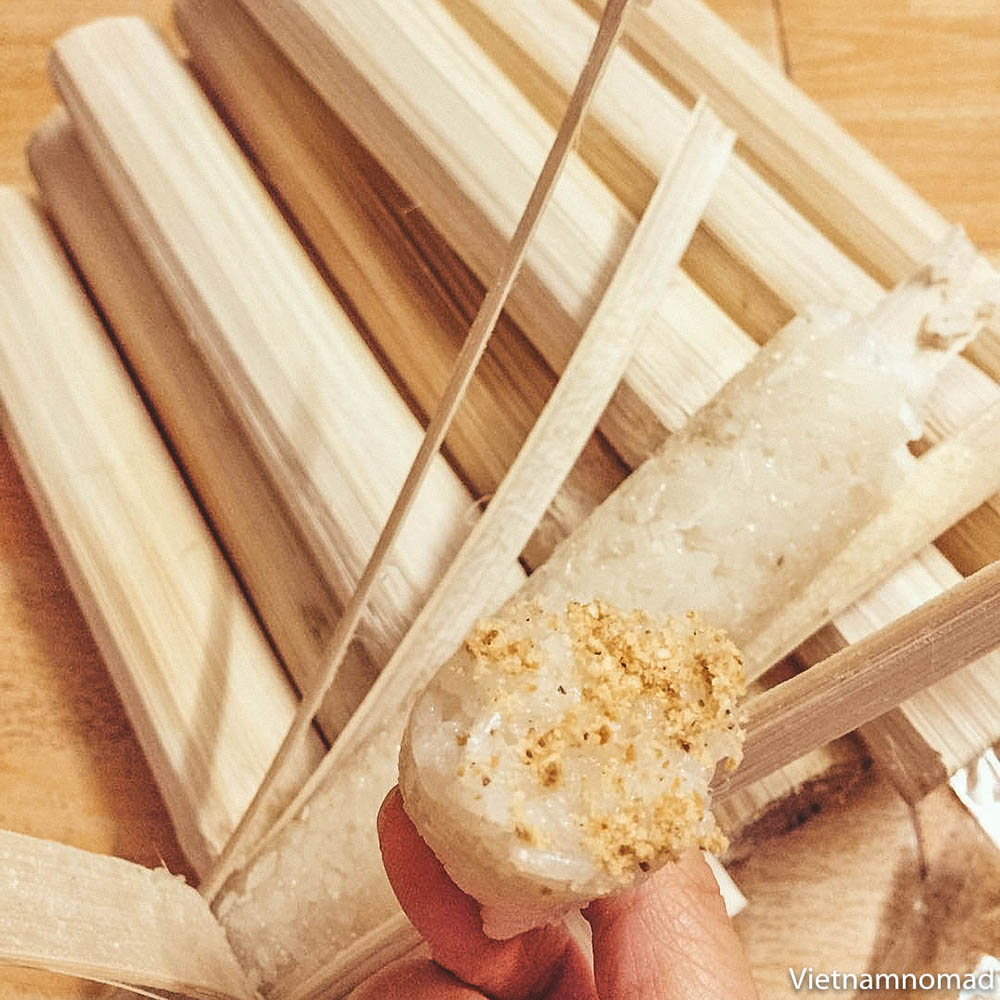
Hailing from Bac Me district along the Gam River, Com Lam is fragrant mountain sticky rice packed into freshly cut young bamboo or neohouzeaua tubes (ong nua). Water from mountain streams and a pinch of salt are added, then the tube is plugged with banana leaves and gently turned over glowing embers until the bamboo husk chars.
When peeled, the bamboo reveals a pure white cylinder encased in a delicate inner bamboo film. The rice absorbs the sweet scent of bamboo smoke and mountain water, and is best savored with grilled mountain pork or sesame salt.
7. Thang Den (Ginger Glutinous Dumplings)
7. Thang Den (Ginger Glutinous Dumplings) - Ha Giang Specialty
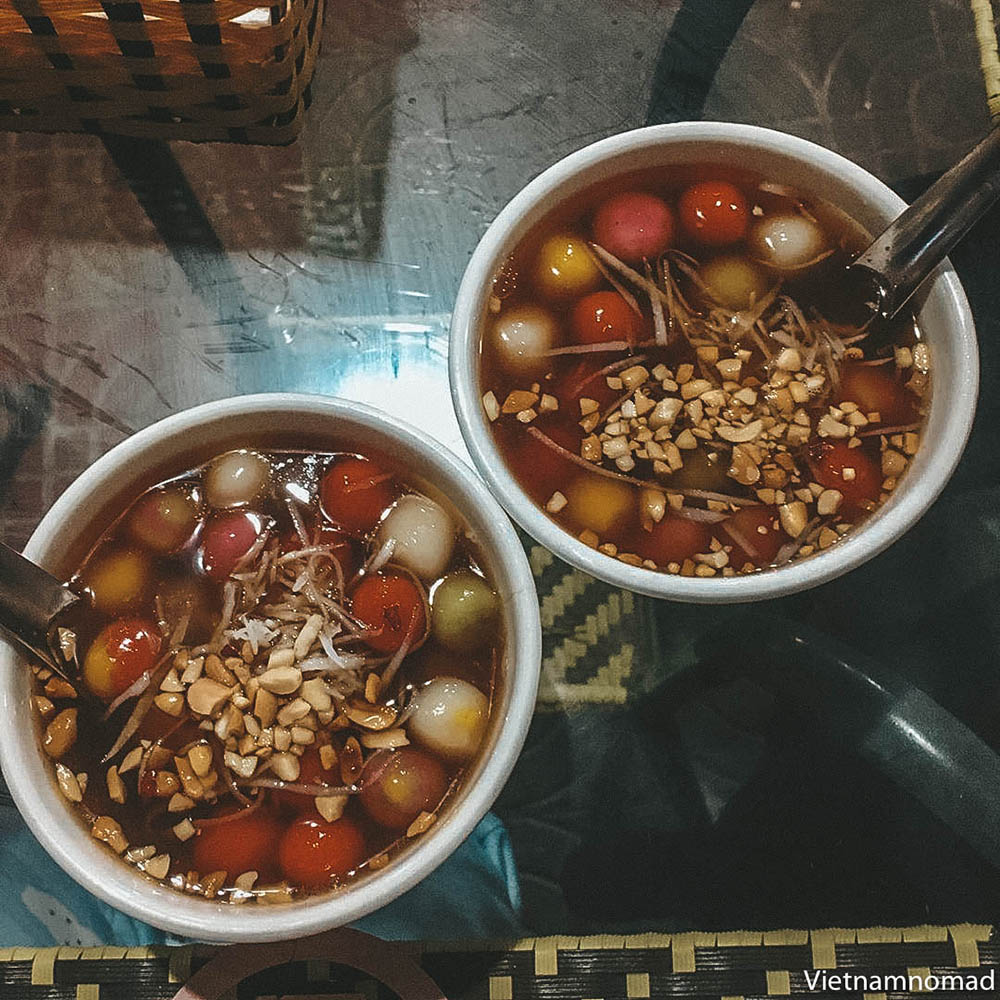
Thang Den is a beloved winter dessert resembling floating rice dumplings (Banh Troi Nuoc). Skilled local cooks mold small, marble-sized balls from fragrant Yen Minh glutinous rice dough, some colored with beetroot or magenta leaves. The dumplings are boiled until they float to the surface, then ladled into warm bowls of ginger-infused cane sugar syrup.
Garnished with toasted peanuts, roasted white sesame seeds, and shredded coconut, a hot bowl of Thang Den provides immediate warmth against the brisk highland winter breeze.
The unique cultural markets in Ha Giang
Vibrant colors and lively atmosphere at Dong Van Sunday Market
Like other provinces across northern Vietnam, highland markets (cho phien) are the most vibrant cultural pulse of Ha Giang. They are not merely commercial venues for trading livestock, mountain herbs, textiles, and tools, but joyful social festivals where hill-tribe families and youths gather dressed in their finest handmade attire.
Dong Van & Meo Vac Markets: Held every Sunday morning. The largest and most famous markets, packed with traders selling Thang Co, corn wine, intricate textiles, and livestock.
Khau Vai Love Market: Held only once a year on the 27th of the 3rd lunar month in Meo Vac. A legendary centuried-old market where separated lovers reunite for one night with mutual respect from their spouses.
Rotating 'Backward' Markets (Cho Lui): Lung Phin, Sa Phin, Pho Cao, and Pho Bang markets rotate every 6 days based on the lunar zodiac calendar, preserving timeless tribal customs.